16 January 2026
The intersection of music and video. The path of collaboration for the music video "The moment" - a conversation between no.9 and Yasuto Ishihama

The song "The moment" was released by no.9 orchestra, led by composer Takayuki Shiro. Ishihama produced the music video for this song, which was inspired by photographer Munehide Ida's photo book "EXPRESSWAY."
This time, flapper3's Ishihama (pictured left) and Takayuki Shiro (pictured right), who continues to work under the name of no.9, looked back on the production of the music video for their song "The moment," and had an in-depth discussion about their roots, the relationship between sound and video, and the differences between client work and creating their own works.
Music and video: their roots stem from curiosity
--First, I'd like to ask about the roots of your activities. As a composer and music producer, you not only work on a wide range of sound designs for TV commercials, web ads, and video works, but you also perform as an artist under the name no.9/no.9 orchestra. How did you get started in the music industry?
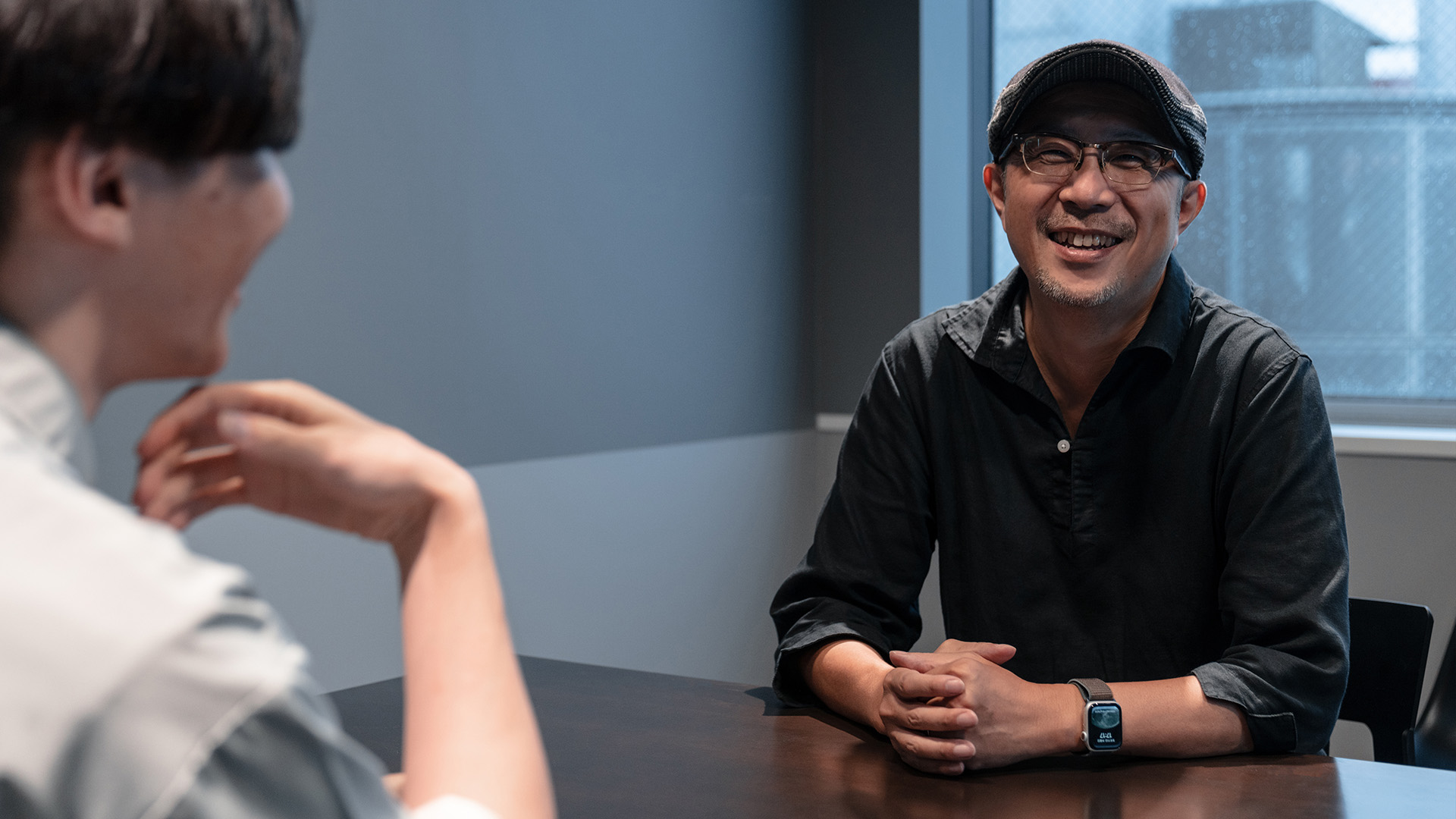
Jyo: I think it all started when I was a student and I formed a band with a teacher I met in an art class. I'd originally played a little guitar, but the teacher was into avant-garde music, like drone music and religious rock. It was very inspiring for me as an 18-year-old. While working with him, I became immersed in contemporary and experimental music. I think I spent most of my twenties making experimental music by combining computers with various external devices. That kind of "groping around in music" is my roots.
At the time, it was a time when control was so difficult that just hearing the sound was enough to move you. But even so, I put music software into early computers, and tried overdubbing and reverse playback on cassette tape multi-track recorders... I pursued music that involved playing with sounds in this way, and ultimately arrived at the electronica that I'm currently making with no.9.
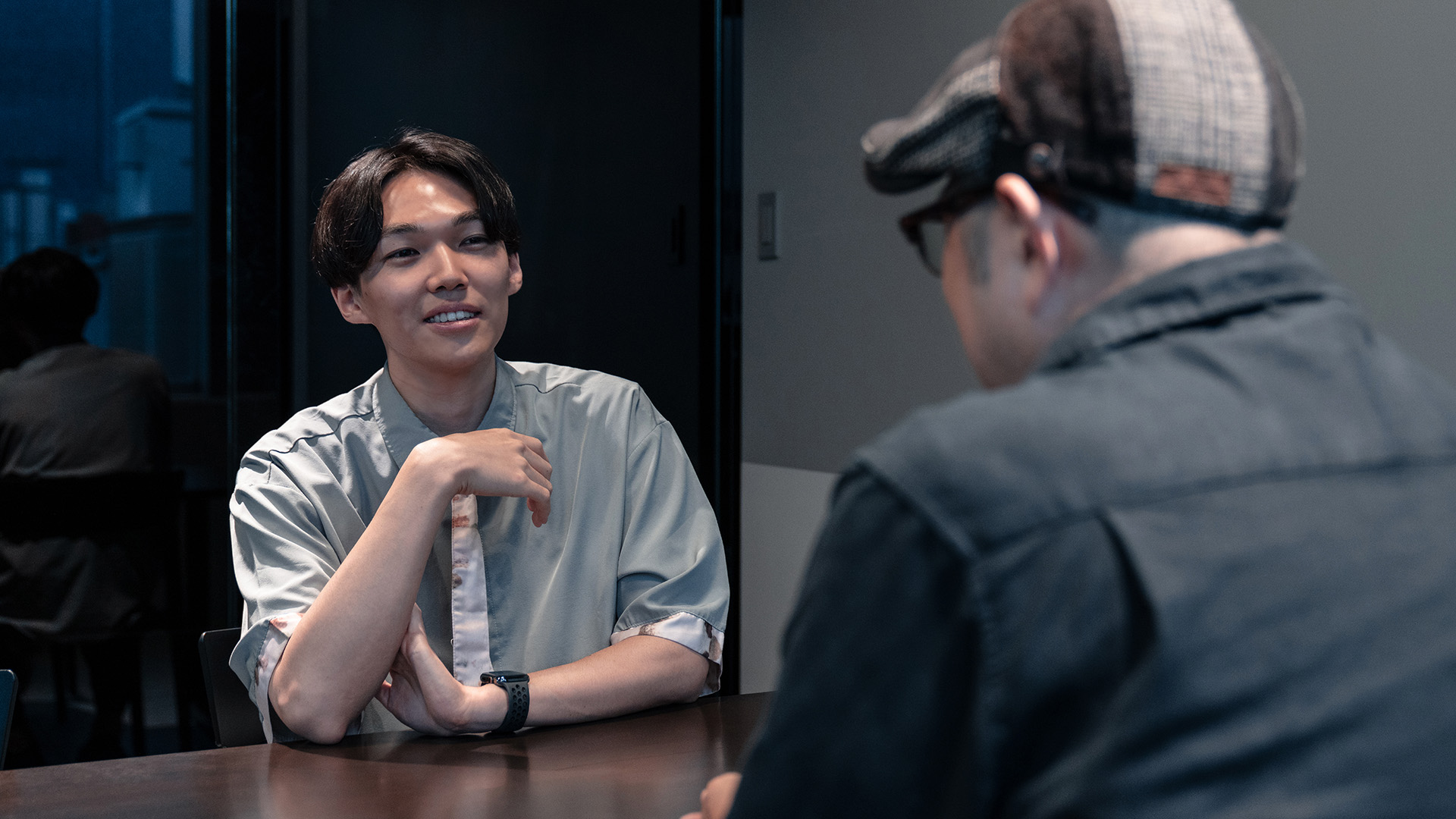
─ Ishihama-san, you've worked on a wide range of videos at flapper3, including live footage and music videos that use CG and motion graphics. You've also been producing videos individually under the name "Yasukura" for about 10 years now. What first got you interested in video?
Ishihama: Ever since I was little, I've preferred taking pictures rather than being photographed. Apparently, when I was a child, I would borrow my parents' flip-phones and take pictures of all sorts of things with the camera. My parents told me that even if they would say, "Look at those beautiful flowers" while they were out for a walk, I wouldn't say "Beautiful!" I would just take pictures (laughs). I also liked machines, and I was the kind of kid who would often play with the video camera we had at home.
Shiro: I've been uploading videos to YouTube since I was about 14 years old.
Ishihama: Yes, I'm from the YouTube generation. I started posting videos on YouTube, and before I knew it, I had aspirations of working in a job that involved video. In high school, I started creating videos using motion graphics and CG. I then went on to study sound, film, installation arts, and more in college, which is where I am today.

no.9 orchestra / The moment
From photos to music, from music to video: a music video born from collaboration that connects "moments"
--Now, I'd like to ask you about the song "The Moment" and the music video you co-created. First, may I ask Shiro-san about the concept behind the song?
Jyo: This song was inspired by Ida Munehide's photo book "EXPRESSWAY." This photo book is a visualization of the "something" that Ida, a car enthusiast, vaguely feels when driving on the expressway, through photographs taken while actually driving on the Shuto Expressway. It contains numerous photographs that capture the "moment" of the scenery passing by at 100km per hour.
"The moment" was created conceptually with the aim of creating music that evokes the imagination and fills the gap between photography, the "art of the moment," and music, the "art of time." It musically expresses the tension of the moment the shutter is released, the "gap" between shutter releases, and the sense of speed on the highway. For example, the piano sound heard at the beginning of the song is inspired by a shutter.
--When you were given Ida's photographs and Shiro's music, what approach did you have in mind?
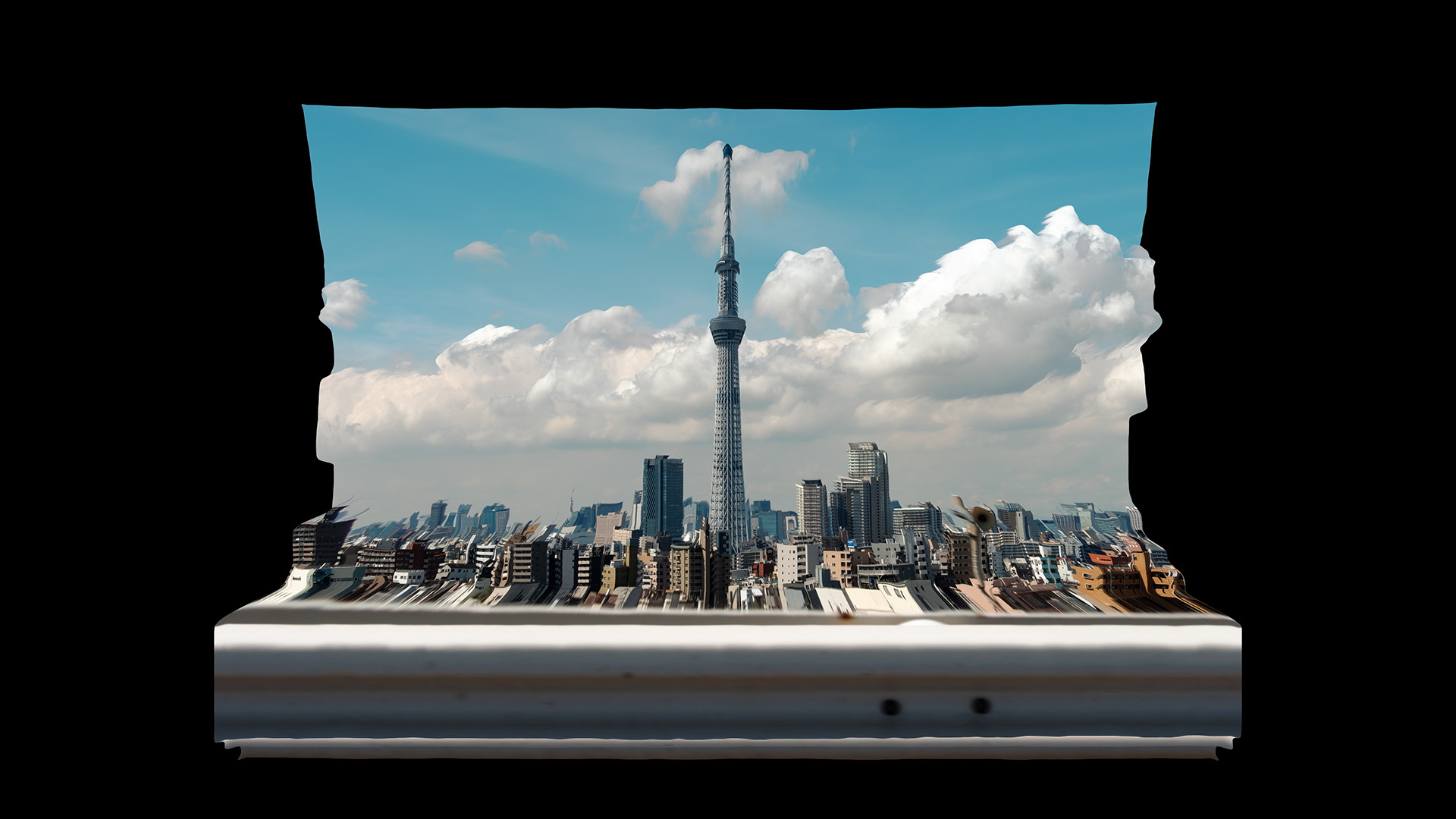
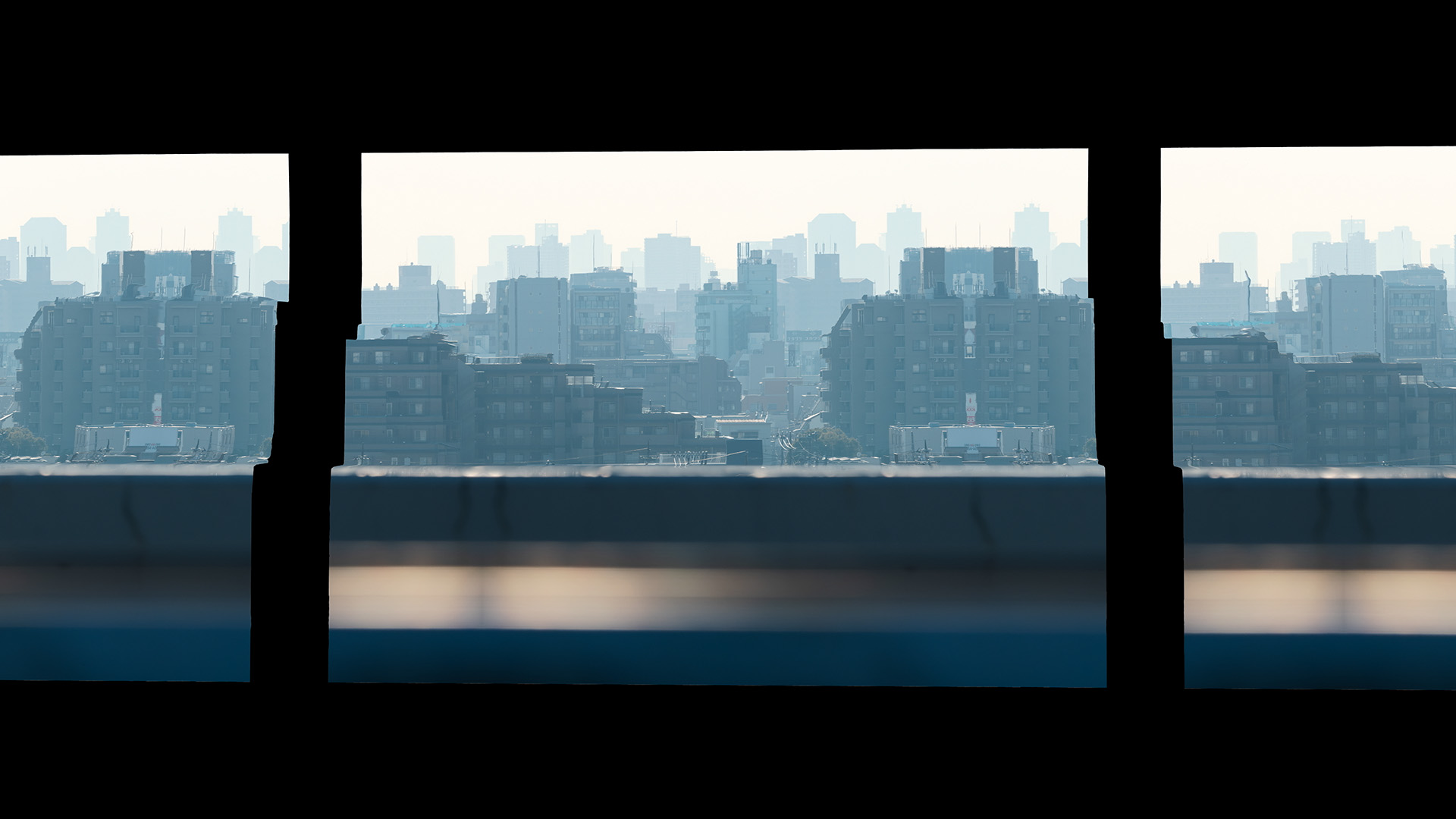
Ishihama: When I heard the first piano notes, I really got the sense that the "moment" was important. However, I felt that simply arranging photographs would not be enough to bring out the sense of speed on the highway in the middle of the film, or the atmosphere of the "moment" captured from that. So I came up with the approach of "what would happen if I moved the photographs again?" I generated a depth map (data that shows depth information) from the original photographic data, and based on that, attempted to create a visual expression that added three-dimensional movement.
Some photos that capture a moment are blurry, but generating a depth map from them will surely produce an interesting result. I proposed this idea because I thought that the unique appeal of the video would emerge precisely because it does not perfectly reproduce the actual scenery.
Jyo: The technique used this time really felt like playing with technology. I think it's a technique used to give a photograph a three-dimensional feel, but it goes beyond that and edits the photograph to the point of creating a different work of art. I think that's what makes it so interesting.
However, I can say this now... when I started working on the song, I made a slideshow of Ida-kun's photos. So when Ishihama-kun asked me to make a music video later, I wondered what I should do (laughs).
Ishihama: I didn't know that! But if I had seen that, I might have ended up being influenced by the slides.
Jyo: In the end, I'm glad I didn't see it. We had a teaser made before the music video, and at the time, I got the impression that the photographs were taking back time. The photographs themselves are still, but I was inspired by them to create the music, and Yasukura-kun created the video. I remember being really moved by the feeling that everyone was creating a movement from the photographs.
I had fun throwing sounds into the black box.
--Why did you ask flapper3 to produce the music video this time?
Shiro: Previously, I had flapper3 create a trailer for my album "History of the Day," and they returned the flat jacket visual to me in 3D. There was a floating island and birds flying... I was amazed and thought, "What is this?" From that moment on, I knew I wanted flapper3 to do my next music video.

no.9 7th album [The History of the Day]
Jyo: There was one more thing: I thought it would be fun to throw sound into a black box. I've known several of the flapper3 members for a long time, and we've worked in the same area, creating sound effects for web pages and music for advertisements. But the company is home to a constantly changing cast of geeky creators that I've never heard of. I didn't know what kind of images I'd get in return, but I had a feeling that it would be a work that captured "this moment," and that was what I was looking forward to.
─And so that's how the production offer came to you, Mr. Ishihama.
Ishihama: Yes. Up until then, I had often made music videos that were based on lyrics, so it was a challenge for me to create a music video using only photographs for a song without lyrics or chorus. I thought it would be interesting and I thought I could gain a lot from it, so I took on the challenge. I think it was precisely because of that constraint that the expression I have created this time was born.
Jyo: Making a music video for an instrumental song using only photographs is quite restrictive. When I was making experimental music with computers, the technology was completely different from what it is today, so there were a lot of restrictions. I had to think of ways to deal with the limitations, but I kept doing it because I believed that there was bound to be art that could be born beyond those restrictions.
Ishihama: I understand. A restricted environment encourages the brain to try and error. I think I wanted to aim for beauty that emerges from such restrictions.
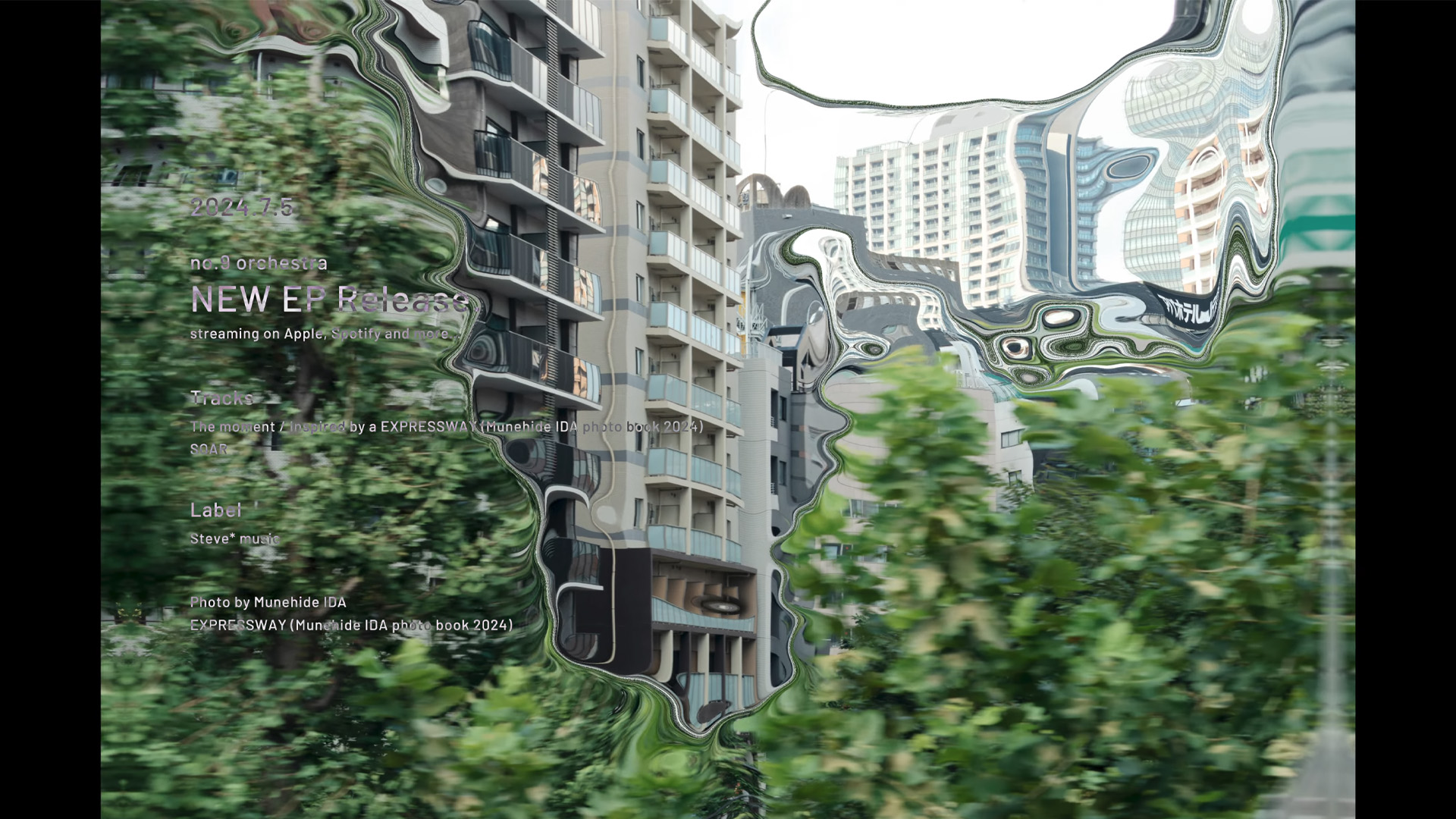
no.9 orchestra / The moment MV teaser movie
A video with a groovy feel, arrived at despite hesitation within constraints
─Was there anything that made an impression on you during the music video production process?
Jyo: The teaser video they made before the actual production was so well done! So when I saw the 3.5 minute MV for "The Moment," I wondered, "How will it develop from here?" When I first saw the first draft, I felt like it had a strong "trying to make it into a MV." We needed to increase the amount of movement in the video to keep the viewers from getting bored, but we didn't want the movement to be just to keep them from getting bored. I remember giving them feedback, asking, "Is this movement necessary for the video?"
Ishihama: I was able to make the teaser without much hesitation, but after that I struggled quite a bit... There were parts where I felt like I might have gone too far in the teaser, so I was very conscious of how to smoothly harmonize the atmosphere of the teaser with that of the main film.
Jyo: I think that work is based on the "tension of pressing the shutter" when taking a photograph. That's why I felt it was strange to have the photo rotate or move in a jerky manner when I pressed the shutter. I felt that it didn't match the groove of the music, so I asked them to make adjustments mainly to that aspect. But overall, it exceeded my expectations. I really love watching dance videos on YouTube. Skilled dancers have a three-dimensional way of keeping the beat, and it feels like the groove of the music is being visualized. I think the same can be said for video. However, while some videos create a groove, others freeze it. Among them, Yasukura's video was the one that ultimately gave me a strong sense of groove.
Also, I found his "messy" side appealing in a good way. For example, you know how there are all these photos of completely different sizes? I'm a meticulous person, so I would always make sure they're all the same, but he brings out the "messy" in his work in just the right way. I felt the quality and freshness of his creator there.
Ishihama: There was a time when I thought, "Since I've chosen this kind of expression, I have no choice but to see it through!", but I also thought that even if it was a little rough, it would be more interesting to express it that way.
Jyo: That way it feels more like a work of art. I also want to clearly distinguish between the advertising music I normally do and the creation of my own work. I think that this time we have completed a video that truly is a "work of art" and not just client work.
But what really moved me was the words Ishihama posted on X: "I made a music video made up entirely of photographs!" (laughs). Just those words conveyed the intention and greatness of the video, and some people were interested and listened to the song. I think it elevated the role of "The Moment" as a music video to another level.
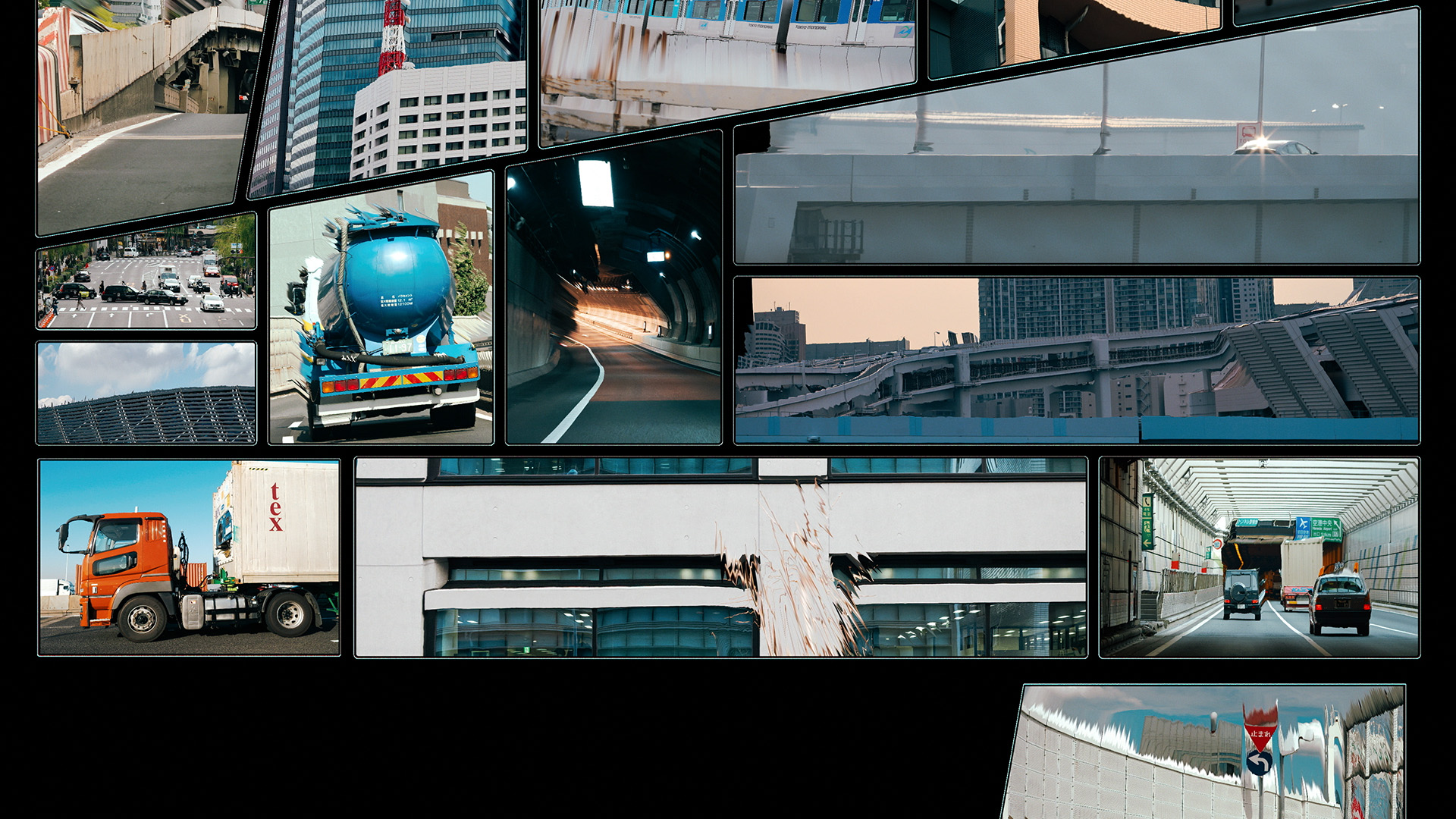
Music and video are now inseparable.
--I'd also like to ask about the role of music videos. Are music videos an extension of the music, or are they independent works? How do you two see it?
Jyo: There's always a connection between them, so I don't think of them as independent works. However, I do like adding sound to images.
Ishihama: I see! For me, I feel that the music is the main focus of a music video. So, ultimately, I think that if you can just listen to the song, you don't need to watch the video... But with this video, I was given a lot of wonderful photographs by Ida-san, so I was very conscious of "coordinating the video and music to create a single piece of work," even if just a little.
Jyo: That's the kind of relationship we have now. When I'm making music, I try to imagine a music video. That makes it more interesting and helps me think about it in more depth. And more than anything, visuals are important these days. When you upload a song to Instagram, you can't upload it without visuals. Having visuals encourages people to listen to your music. In that sense, I think we're both helping each other grow.
Ishihama: I think that in this day and age, many people discover music by watching short videos on TikTok and thinking, "This song is great," but there are also people who listen to music and imagine the video. I believe that video and music are inseparable.
Taking on the challenge of independent production also broadens the scope of my work
--I think this music video is a "work" born out of co-creation between the two of you, but how do you think about separating your work for clients from your own creative work?
Jyo: When I work for a client, the budget, deadline, and objectives are set. For example, to sell a product or to make the product look good. I think that's the difference from creating my own work.
Ishihama: It feels like walking down a path with a goal in sight.
Jyo: The overwhelming fun lies in the fact that we each prepare the materials we can contribute to achieve our goal, and then see how we can create something amazing within the budget. Our job is to put all of the skills that each of us has into it, and create something that's just a little better than what the other person imagined during the meeting. Like, "It's a little better than I thought!" (laughs). I think that "a little" is quite important.
--So, what about your own work? Are you continuing to create your own work?
Ishihama: I think there are some filmmakers who are suited to client work, and others who find it easier to create their own work that expresses their own individual style. Personally, I'm the type who finds it easier to work with a certain amount of guidance. I made a lot of different things during my university days, but it was difficult to create my own work...
Jyo: The amount of work required for music and video is different. Music has a format that's set to a certain extent, so it's easy to have a purpose and motivation for releasing it, but videos are often uploaded for free to social media, so it may be difficult to find motivation for anything other than promoting yourself.
But I believe that musicians and filmmakers alike should create their works as a life's work. Anyone can become a musician, but it's quite difficult to remain a musician or a filmmaker. The moment your curiosity dies out, you're no longer a filmmaker. That's why I sometimes look at social media hoping it will stimulate my curiosity.
Ishihama: That may be true. I feel that if I don't create works that allow me to express myself regularly, my passion will die.
Jo: Of course, I can make a living just from client work. But this music video was an expression that I wouldn't normally use in client work, right? If I try that kind of work, I'll be able to suggest to clients, "This kind of expression is also possible," and I think that will definitely broaden my horizons.
Continuing to pursue expression alongside ever-evolving technology
─Finally, please tell us what you would like to try in the future.
Shiro: I've been working on my ninth album for the past seven or eight years, and since I'm performing under the name no.9, I'd like to mark the end of it with the ninth album.
I think of making an album as climbing a step on the ladder of my creative career, and if you release songs you've made as soon as you make them, like in today's world, it becomes like an uphill climb. That makes it hard to notice that the scenery you see is changing.
So, right now I want to carefully create each album as an album. I'll finish the work and move on to the next one. I think that once I finish the ninth album, I'll start creating something new.
Ishihama: I would be happy to be involved at each of those milestones!
Jo: I'd love to work with you again. Technology will probably have advanced even further by then, so we might be able to do something completely different.
--What kind of video work would you like to try?
Ishihama: I would like to try my hand at various experimental visual expressions. I think experimental music expression is now making its way into the mainstream scene, and I feel there are similar opportunities in video. For example, even though it looks like a real, live-action space, the shapes of the objects and the world within it change in response to the sound... something like that. I would like to take on the challenge of creating videos that match the sound and are pleasant to watch, making full use of technologies such as CG and AI. To that end, I would like to hone my fundamentals with flapper3 and expand my possibilities.
MEMBER
INTERNAL
-
CG DESIGNER
YASUTO ISHIHAMA
EXTERNAL
-
No.9
RELATED TOPICS
-
The intersection of music and video. The path of collaboration for the music video "The moment" - a conversation between no.9 and Yasuto Ishihama
-
What does the project manager, who is the core of the creative team, see as the “flapper3-like” quality?
-
Yugo Chiba leads the way in new possibilities for spatial design and regional revitalization