26 January 2024
Flapper3's spatial production using music and video, a VJ's perspective

A VJ (visual jockey/video jockey) is someone who projects images in real time along with music to create a special atmosphere in a club or live show. There are many different techniques, such as mixing pre-prepared images on the spot, making impromptu drawings and projecting them, or using generator software to generate images on the spot.
This time, five members with a background as VJs will talk about what they keep in mind when producing VJ videos and how their experience as VJs can be put to good use in spatial design.

The role of a VJ is to pursue a sense of unity between the music and the venue
-You're all active VJs working individually, but is there anything you keep in mind when working as a VJ or creating?
Yako: "Does the music look cool when it's projected in the venue?" I think this is the standard for good VJ video production. Videos uploaded by video creators to video sharing sites look cool when viewed alone, but many VJ videos look lame when viewed alone. However, when it is combined with the music and the atmosphere of the floor, it has a great effect. I think it's difficult to recognize this feeling unless you have experience as a VJ.
Yokoyama: That's true. It's boring to watch videos on YouTube that are just a single color flashing, like those used by VJs, but when you see them on an LED monitor at a venue, they look really cool. I'm very conscious of how they look on-site.
Horii: Moreover, the screen on which the VJ's images are projected is generally large. The image looks different from when you watch it on a computer.
Sato: I also value that feeling. I originally started VJing as a way to output my own video works, but when I was VJing at clubs, I began to understand that "when this kind of video is played in this place, the space looks like this." I think the sense of a VJ who creates a space in real time with video is also alive in creating videos for live shows and events.

- I think the work of a VJ is based on music, but how do you approach music?
Yako: It's also a VJ's job to read music. I read the flow of the music and mix the images while predicting what's going to come next. I also create images for VJs while considering the musical structure. There is a certain flow to each genre of music, such as POPS or EDM. I think I have somehow embodied in myself the idea that "this image would be good for this part."
Sato: I think that thinking like, "I want to create a visual composition like this as we move towards the final chorus!" is something that can only be understood by someone who loves music and has experience on the scene.
Yamamoto: This is true not only for VJ images, but also for MV and live video production, but I value "boosting the image of the music". To that end, I not only create images that are close to the music, but also sometimes I deliberately clash images with different impressions to stimulate the imagination. You can approach it from either direction, but the point of "accelerating the music" should be the same.
 ASOBINOTES ONLINE FES
 ASOBINOTES ONLINE FES
 ASOBINOTES ONLINE FES
 ASOBINOTES ONLINE FES
From streaming events to live stages with special LED monitors. Flapper3 looks back on his VJ career
Yako: At the online event "ASOBINOTES ONLINE FES" hosted by Bandai Namco Entertainment, the three of us were in charge of the VJs on the main floor. Normally, we adjust the brightness and decide which images to show based on the atmosphere of the venue and the excitement of the audience, but this event was streamed, so it was difficult not to do that.
Yokoyama: Normally you would adjust the lighting for the entire floor while checking it, but at that time we only had the stage lighting. It was hard to see what it looked like.
Yako: That's right. But I remember that they prepared a dedicated monitor to show the state of the distribution. It's quite different from VJing while thinking about "how does the whole space look cool?" on site, but I tried to do VJing that would look cool even if only a part was cut out by the distribution camera.
Yamamoto: It was an event with DJs from a variety of genres, so I ended up doing VJ work for music genres that I don't usually do. It was difficult, but it was a memorable project.
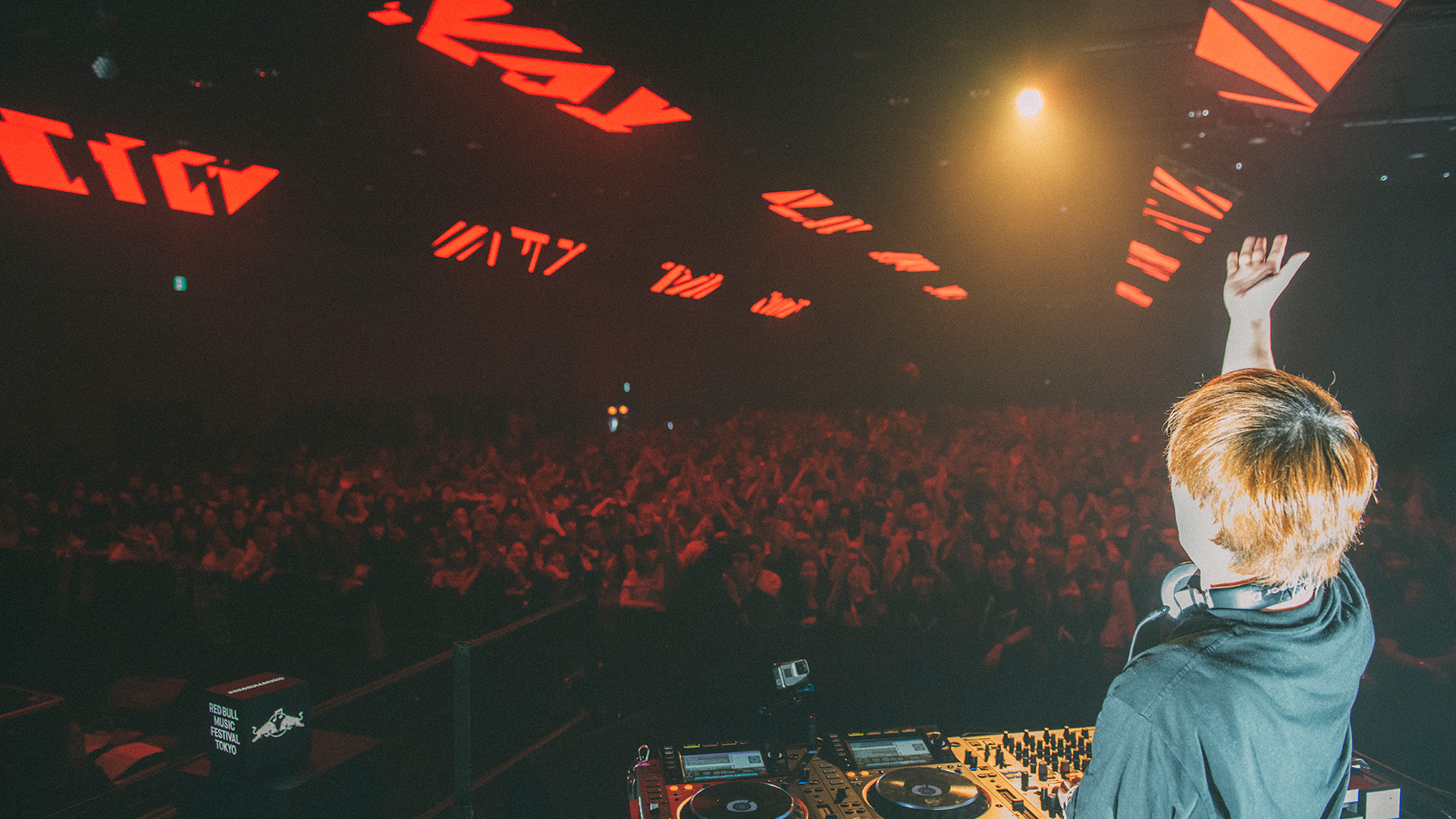 RedBull Music Festival Tokyo 2017
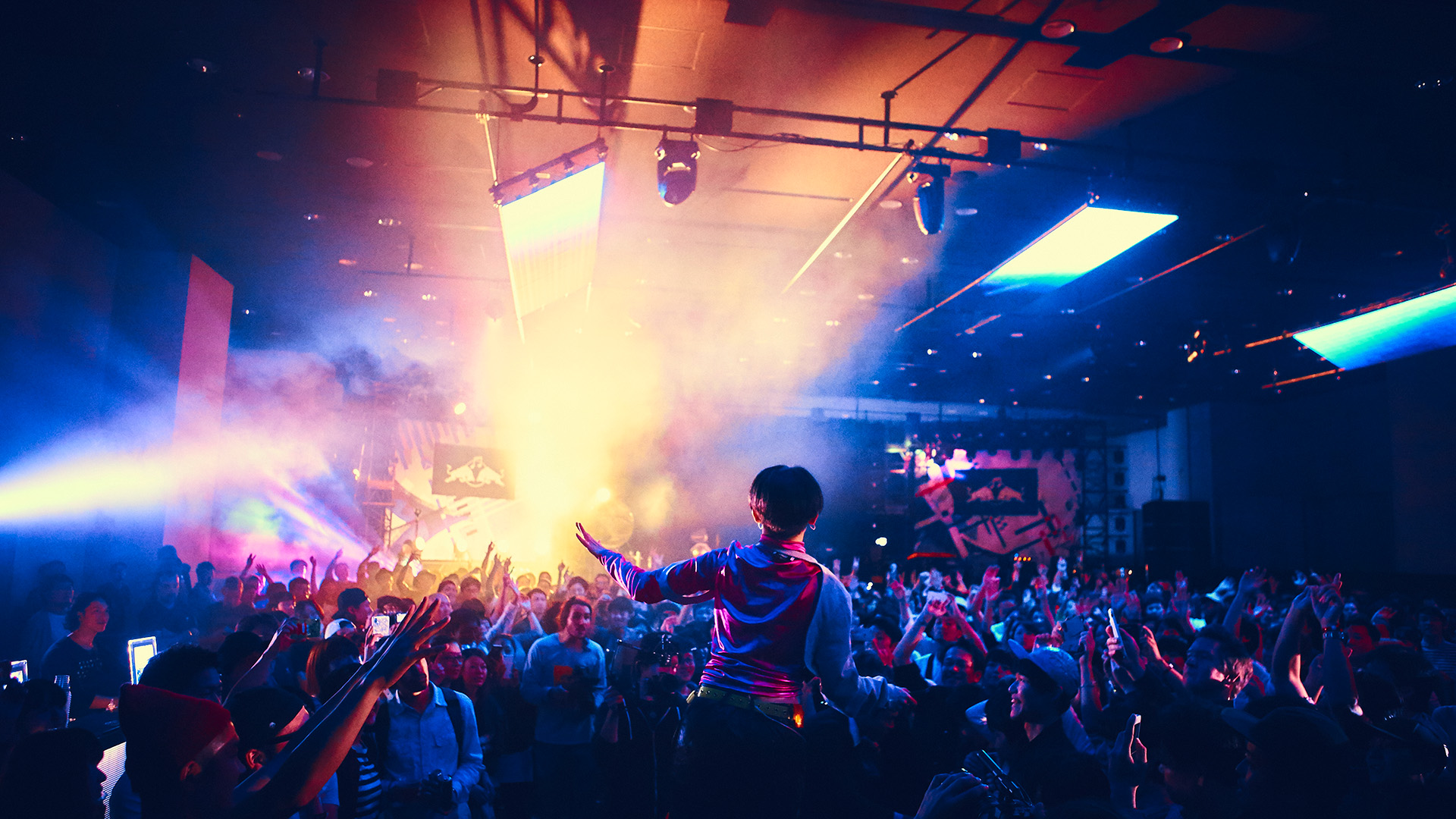 RedBull Music Festival Tokyo 2017
Yako: I was also impressed by the live event "SOUND JUNCTION Shibuya Music Crossing" that was held as part of the music festival "Red Bull Music Festival Tokyo 2017". There were stages in each of the four corners of the floor, and four artists performed in a relay format, and I was in charge of VJ for the event.
Yokoyama: It was a somewhat unusual venue, with 12 long, rectangular LED displays lined up on the ceiling, which were more for "lighting" than for projecting images.
Yako: To begin with, LEDs are often used as light or lighting. For this project, we aimed to create a video production that took into account the effect of lighting.
Yamamoto: The event was based on the red and blue colors of Red Bull, and taking advantage of the layout of the LEDs lined up in a straight line, we incorporated images that looked like lines of light running through the entire space, with the aim of producing videos that would enhance the entire space.
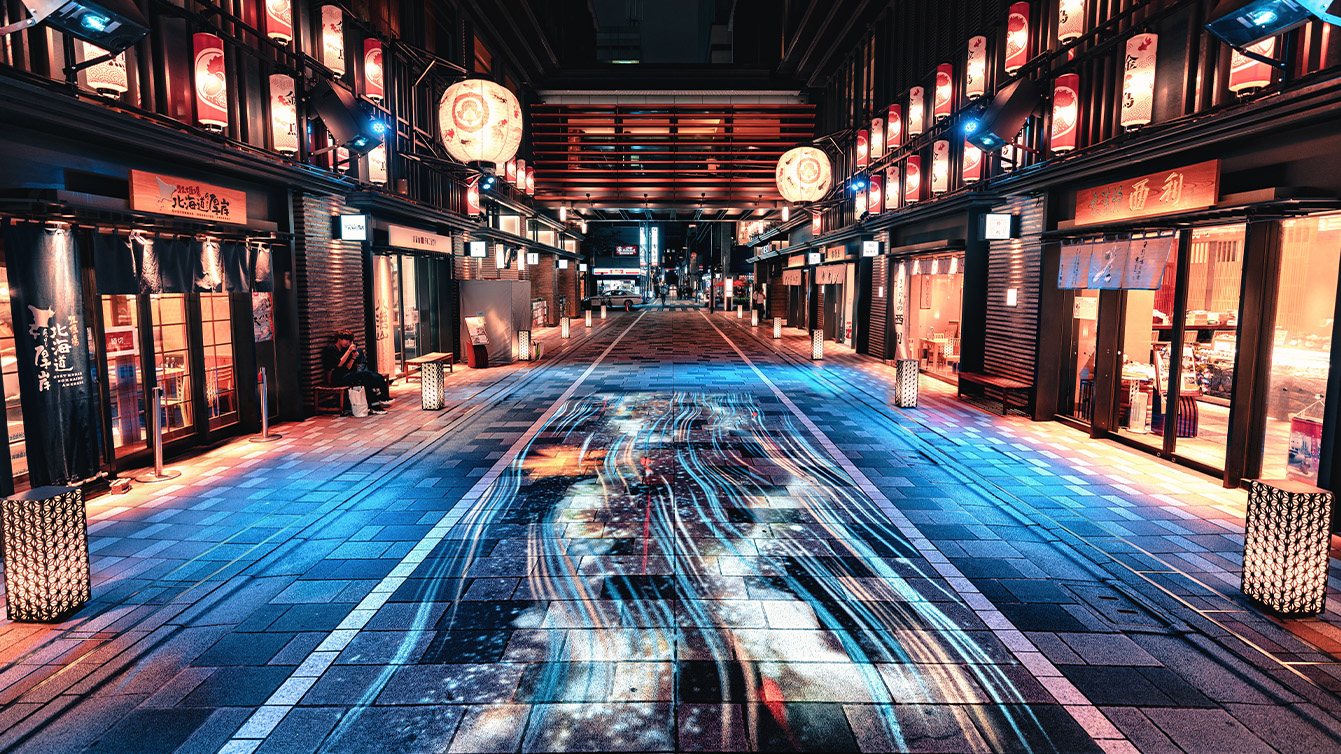 ECO EDO Nihonbashi
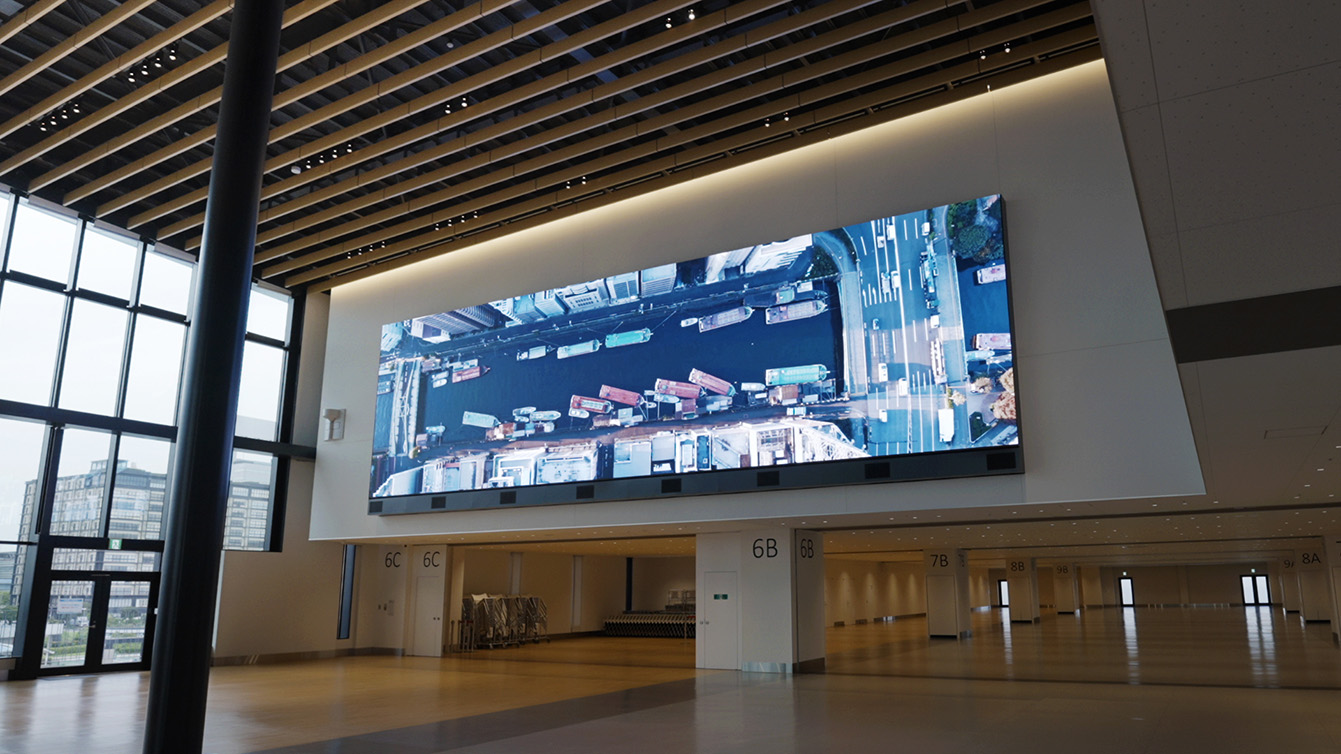 Tokyo International Cruise Terminal
Spatial production skills cultivated in the field of VJing, useful for a wide range of content production
--When you take on projects other than live shows and music events, do you ever feel like your VJ experience comes in handy?
Yamamoto: VJing is an activity that relies on being on-site, so I think it cultivates the imagination to think about how the image will look on-site. In particular, the sense of brightness. For example, "ECO EDO Nihonbashi 2019," which I was in charge of directing, was an outdoor event, so I was able to use my experience as a VJ to imagine, "It will look like this at this time of day."
Horii: It's true that being familiar with the actual location is a big factor. VJs often don't use the footage they've created as is, instead looking at the actual location and changing the brightness of the footage on the spot, or increasing the contrast to adjust how it's presented. I don't think you can develop that kind of sensibility just by creating and delivering footage. I think being able to suggest the best way to present the footage in that space in real time is a strength.
Yako: Also, I think the VJ skill of "thinking about the situation in that space" is useful in other projects. For the "Tokyo International Cruise Terminal" project, I was in charge of the video that would be played on the floor where people waited for the ship, and I thought about what kind of video and music would be played so that people would be able to wait comfortably without getting bored. At live events, the production is aimed at people who want to have fun, so it's the complete opposite, but I feel that creating such spaces has something in common with VJ activities.
--What do you think is flapper3's strength in video production?
Yako: I think it's because many of our members have experience as VJs and know the feeling of the field. There aren't many companies with so many VJs. There are many things you can't know unless you actually experience how a video will look on-site, so I think it's an asset for flapper3 that many of our members have a kind of intuition that they've cultivated on-site.
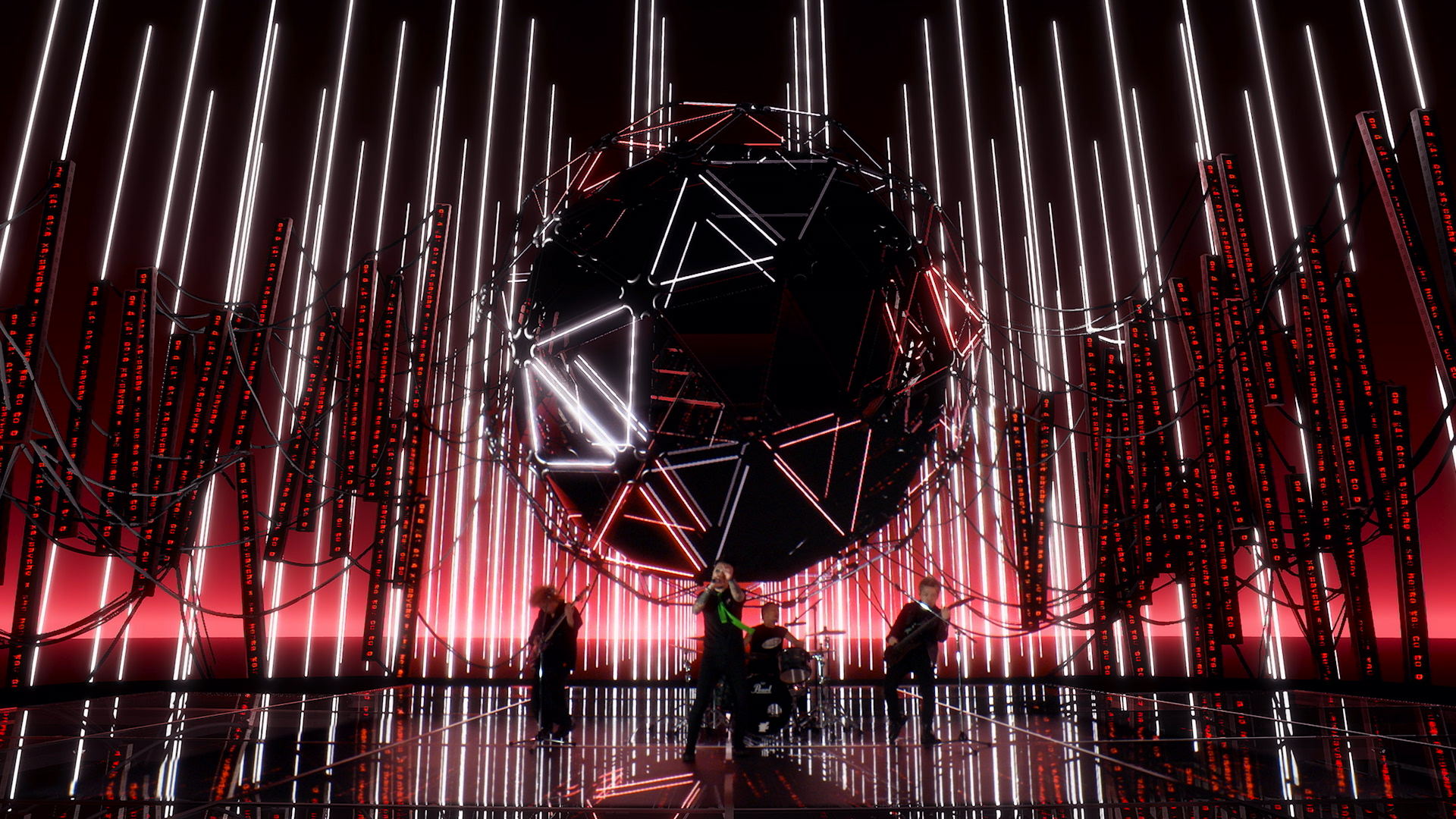 SiM XR Live
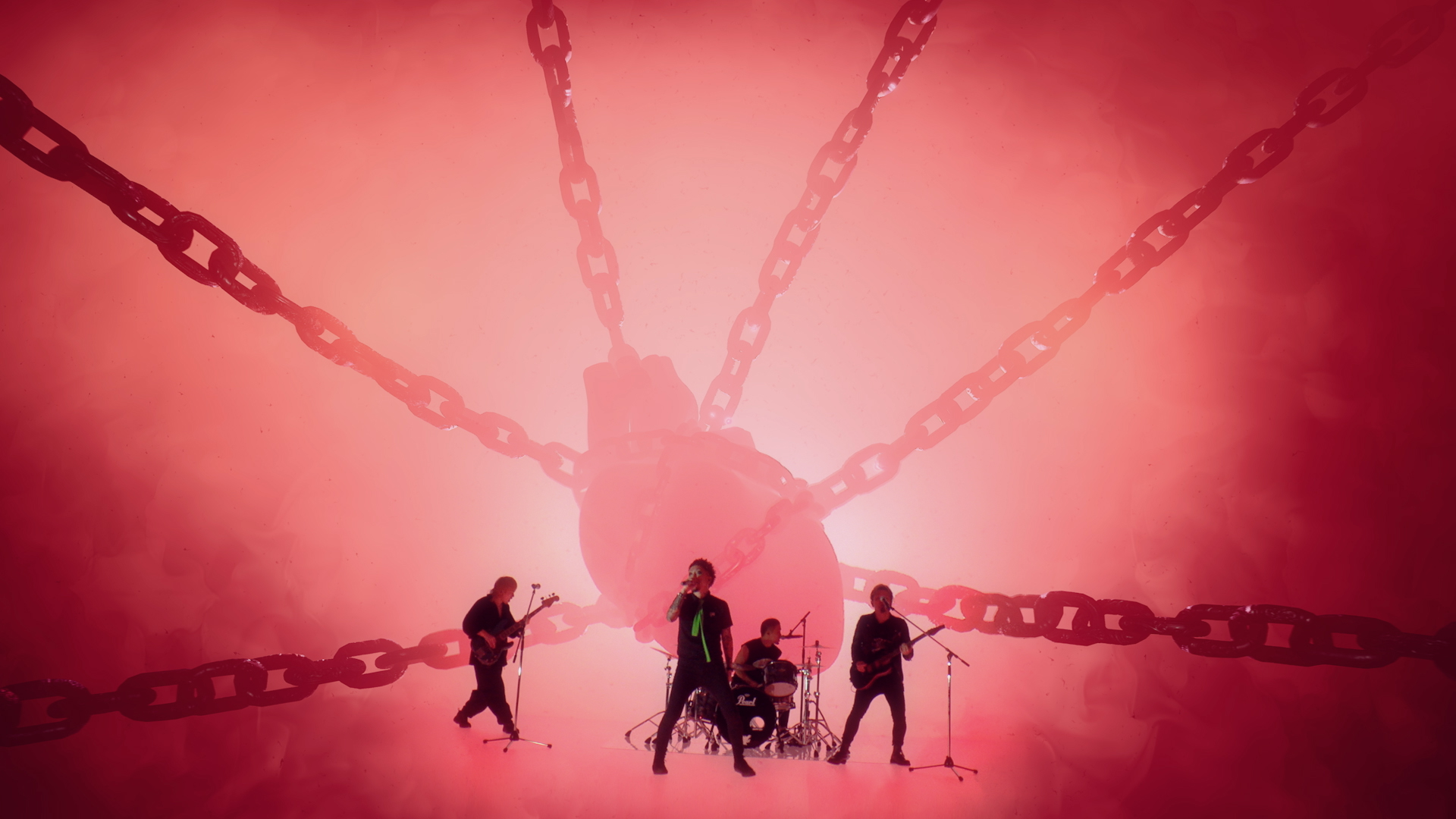 SiM XR Live
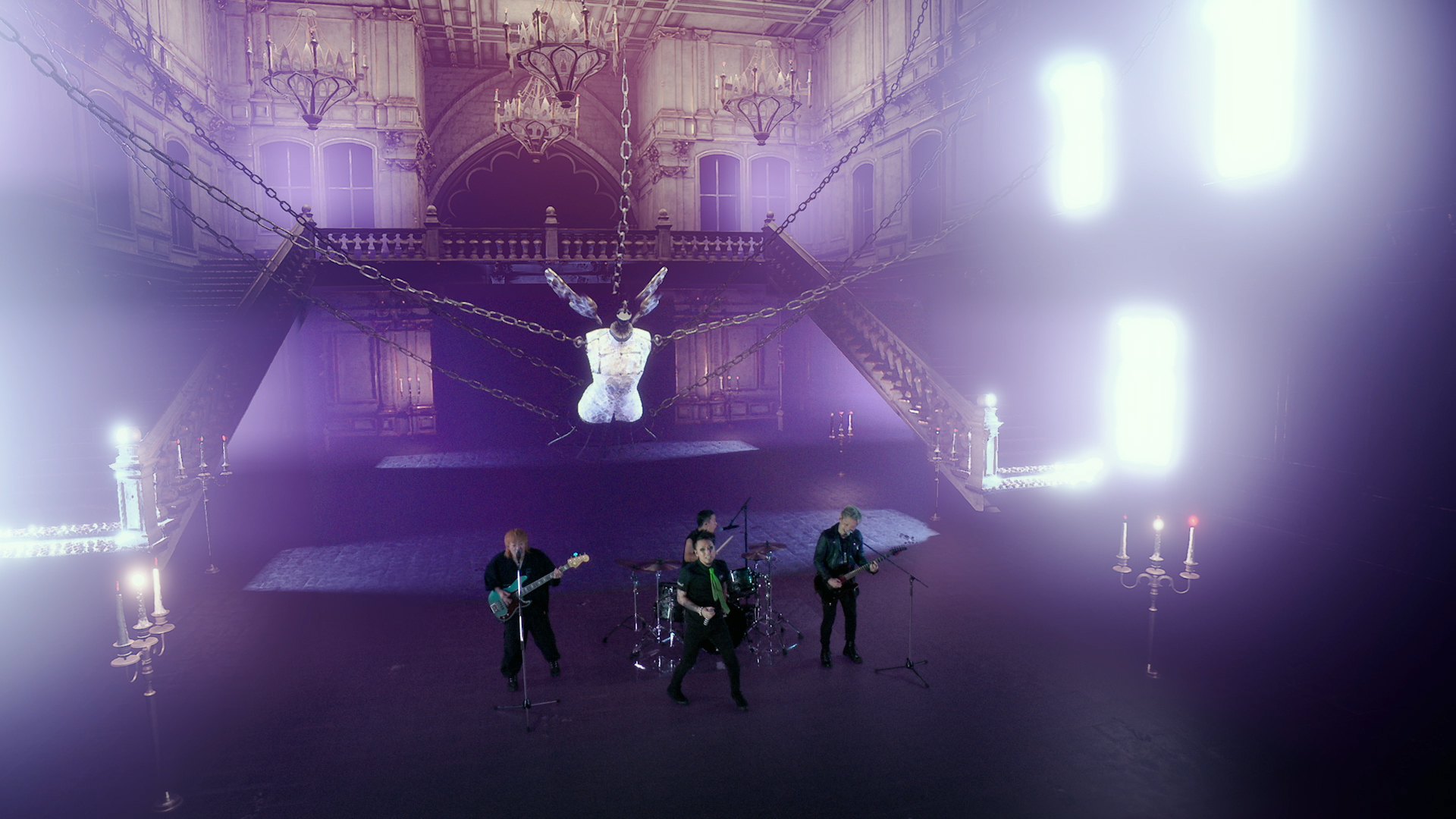 SiM XR Live
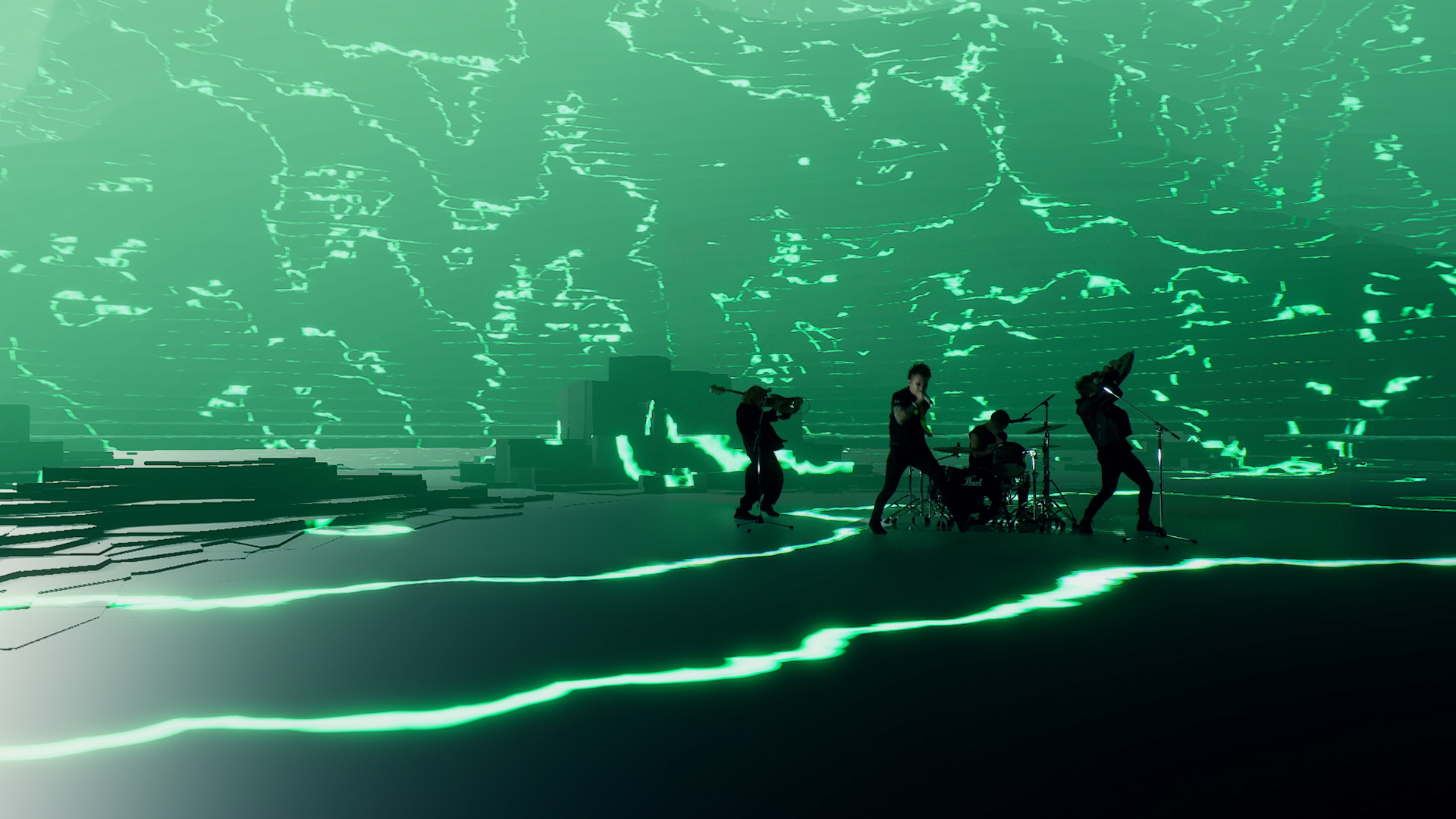 SiM XR Live
Expanding with VJ video production as the core
Flapper3's content delivers the extraordinary
-Finally, please tell us what you would like to focus on in the future.
Yamamoto: Personally, I would like to delve deeper into virtual production. The first project I was in charge of was "SiM XR LiVE," and I felt that it was an extension of my VJ activities, directing a space with video. I would be happy to continue to be actively involved in the future.
Sato: I would like to continue creating content centered around music. As a VJ, I have the role of thinking about what kind of images and experiences to add to the constraints of music, and I find that interesting, as it's like solving a mystery. I can also check how my performance went by the audience's reaction. I would like to use my experience as a VJ in live video and live performance production, virtual production, and other areas.
Yokoyama: I'm also the type of person who gets excited about creating things under constraints (laughs). I usually work on the opening videos of content, and I hope to continue to create works that shine in that time and place.
Horii: I think it would be interesting to study lighting more and be able to direct the entire stage. Basically, there is a lighting technician at live shows and clubs, and they create the space while keeping each other in mind, but when you look at big events, there are many stages where lighting and VJ images are integrated. Flapper3 has a tech team, and I would like to try to do stage direction that incorporates lighting.
Yako: I've always loved thinking about how to present artists, content, and characters, and how to make them look better, so I want to continue doing that. What hasn't changed since I started VJing at the age of 17 is my desire to "create extraordinary experiences." Creating an extraordinary experience in a club is the job of a VJ. That's why, whether it's virtual production or an XR live performance, I want to continue accelerating my desire to deliver extraordinary entertainment in the future.
MEMBER
INTERNAL
-
CREATIVE DIRECTOR
NAOHIRO YAKO
-
CHIEF DIRECTOR
TAIYO YAMAMOTO
-
DIRECTOR
NAOTO YOKOYAMA
-
TECHNICAL DIRECTOR
KENTARO HORII
RELATED TOPICS
-
The intersection of music and video. The path of collaboration for the music video "The moment" - a conversation between no.9 and Yasuto Ishihama
-
What does the project manager, who is the core of the creative team, see as the “flapper3-like” quality?
-
Yugo Chiba leads the way in new possibilities for spatial design and regional revitalization